Facebook ads call tracking down to the ad
See which Facebook and Instagram campaigns, ad sets and ads make people pick up the phone, then send those calls back to Meta so your ads find more people who call.
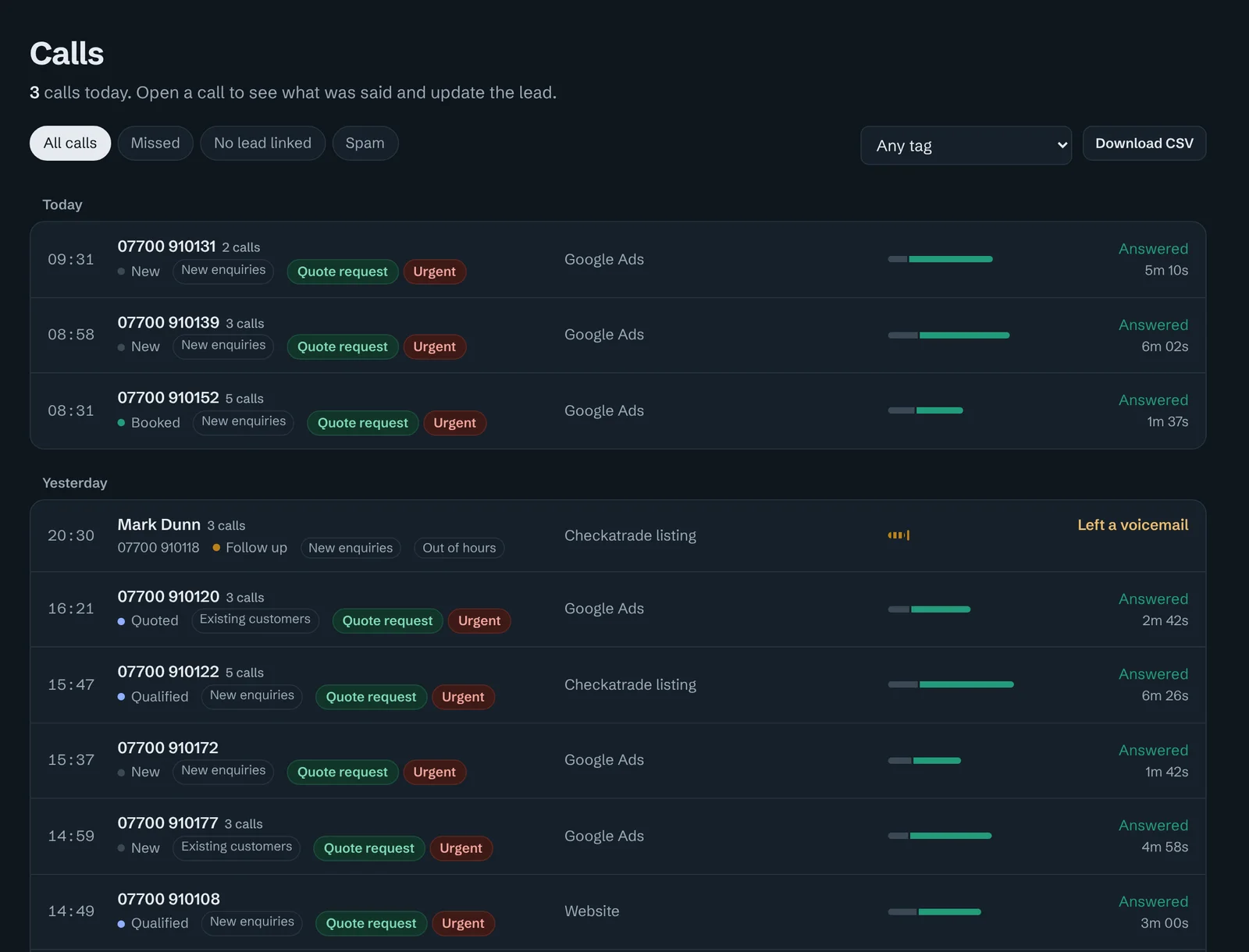
The calls Meta never sees
A homeowner sees your roofing ad, taps through to the landing page, has a look around and rings the number at the top. In Ads Manager that's a link click and nothing else. The call, the job and the money all happen somewhere Meta can't see, so the ads keep optimising for clicks.
For trades, home improvements, clinics and most local services, those calls are the best leads a campaign produces. Without call tracking you're judging your Facebook ads on the leads that matter least.
How it works
- Paste Calltrail's URL parameters into your ads once. They pass the campaign, ad set and ad names with every click.
- Visitors from the ad see their own tracking number on the landing page, in the text and in tap-to-call buttons.
- When that number rings, the call is matched to the click: campaign, ad set, ad and landing page.
- Answered calls go back to Meta through the Conversions API, using the rules you choose.
Know which creative actually rings
Two ads with the same click-through rate can bring very different calls. Calltrail shows calls by ad, so you can see that the before-and-after video brings booked surveys while the discount image brings price shoppers, and spend accordingly.
- Answered, missed or voicemail for each call, with talk time.
- A recording, transcript and summary of what the caller wanted.
- Automatic tags such as “Quote request”.
- The lead's stage, so you can count booked jobs, not just calls.
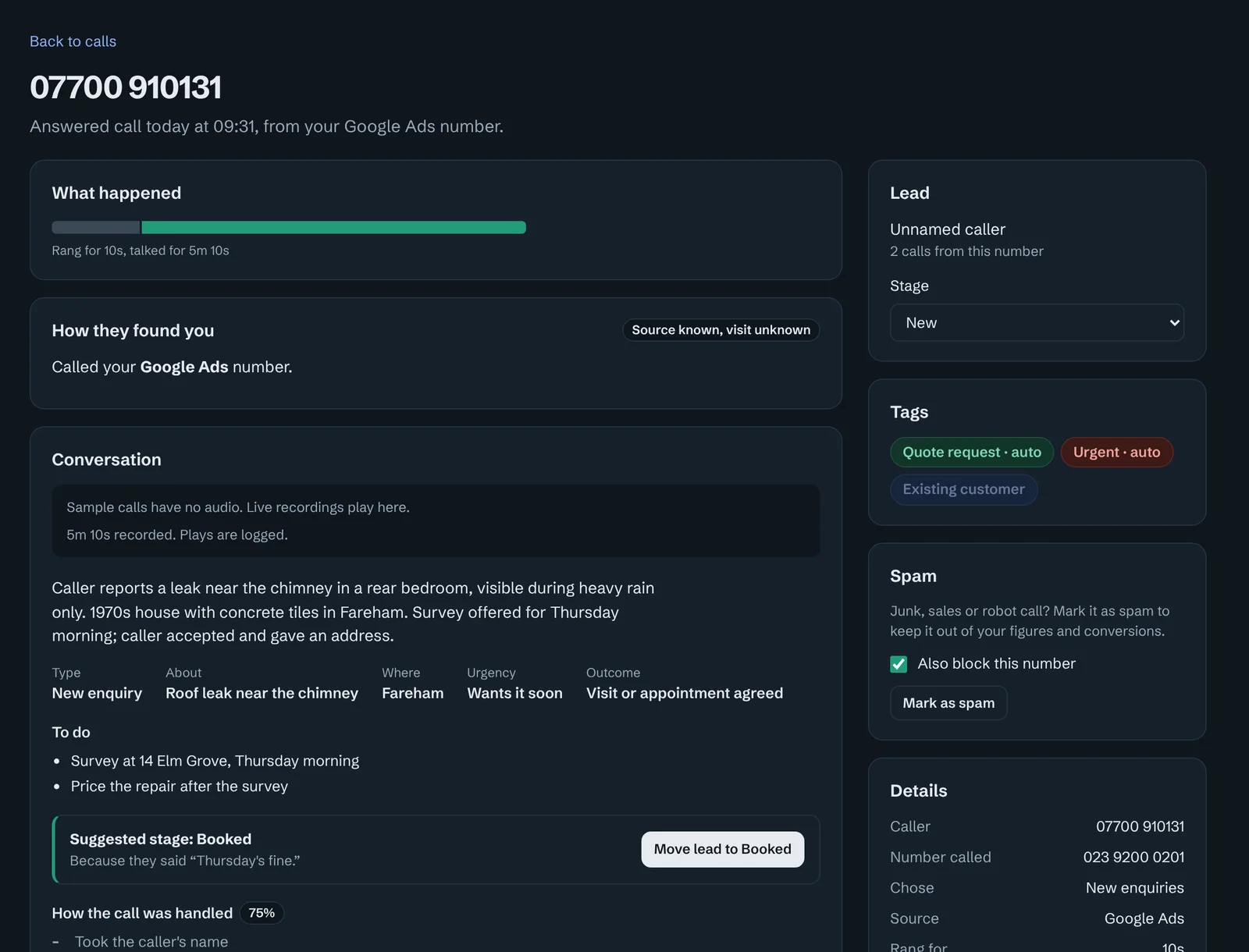
Proof for clients, not just a cost per lead
If you run Facebook ads for local businesses, missed calls and slow call-backs can make good campaigns look bad. Calltrail shows the client every call their ads produced, which ones they answered and which callers are still waiting for a call back, so the conversation is about results, not blame.
Questions people ask
Can Meta Ads Manager track phone calls on its own?
Only calls made straight from a call ad's button, and even then Meta can't tell you whether the call was answered, how long it lasted or what was said. Most people who see a Facebook ad visit the website or landing page first and ring from there, and Meta never sees those calls. Calltrail does.
How does Calltrail know which ad someone clicked?
You paste Calltrail's URL parameters into each ad. When someone clicks through, the landing page shows them their own tracking number and Calltrail notes the campaign, ad set and ad. When that number rings, the call is matched to the click.
What about Facebook lead forms?
Lead forms don't involve a phone call, so they're outside call tracking. But if a lead-form lead later rings the business, Calltrail shows the call with its source, and leads from website forms are matched to the same person when they also call.
Will Meta optimise for phone calls?
Yes. Answered calls, or calls whose lead reaches a stage such as booked, can be sent to Meta through the Conversions API, so your campaigns learn which people actually pick up the phone.
Do I need a website for this?
You need a landing page or website the ad sends people to, with the Calltrail snippet on it. For call ads that dial straight from Facebook, use a fixed Calltrail number in the ad instead.
Find out which ads make the phone ring
Book a 20-minute walkthrough. We'll show you Calltrail with sample clients, and set up your first tracking numbers if it suits.